Published April 19, 2024
What is choline?
Often overshadowed by more famous vitamins and minerals, choline has finally risen to the top of the nutrition world, now being recognized for its crucial role in our well-being. It recently got promoted! Choline is now considered an essential nutrient. Let’s dive into the molecular world of choline, understand its function, discover its sources, and reveal why it’s essential and deserves intentional intake either in diet or supplement form
multifaceted, necessitating immediate action to mitigate these risks.
What is the the molecule?
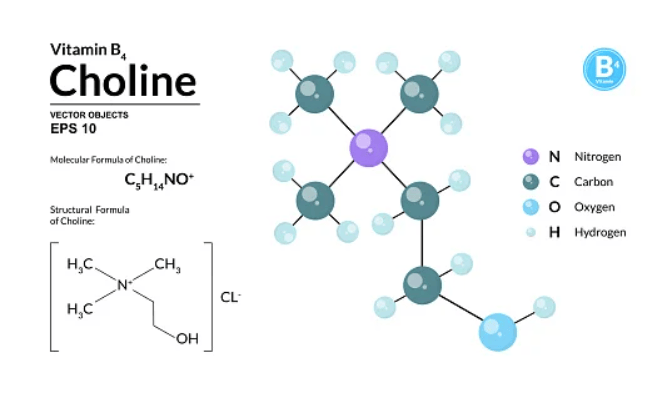
Choline is a quaternary ammonium salt, consisting of an ethyl group linked to a nitrogen atom, surrounded by three methyl groups and a hydroxyl groups (see picture above). This unique arrangement allows choline to perform a variety of biological functions, acting as a building block for cell membranes and as a precursor to the neurotransmitter acetylcholine, critical for brain and muscle function.
Why Choline is Now Recognized as Essential:
For years, the significance of choline was underestimated. However, recent studies have illuminated its indispensable role in human health, leading to its recognition as an essential nutrient by the National Academy of Medicine. This shift was driven by choline’s involvement in liver function, brain development, and muscle movement. Without adequate choline, our bodies cannot properly transmit nerve impulses, detoxify the liver, or maintain structural integrity of cell membranes. Wow, it does so much. While actual deficiency is rare, many people in Western countries are simply not getting enough of this essential nutrient.
Where is Choline found?
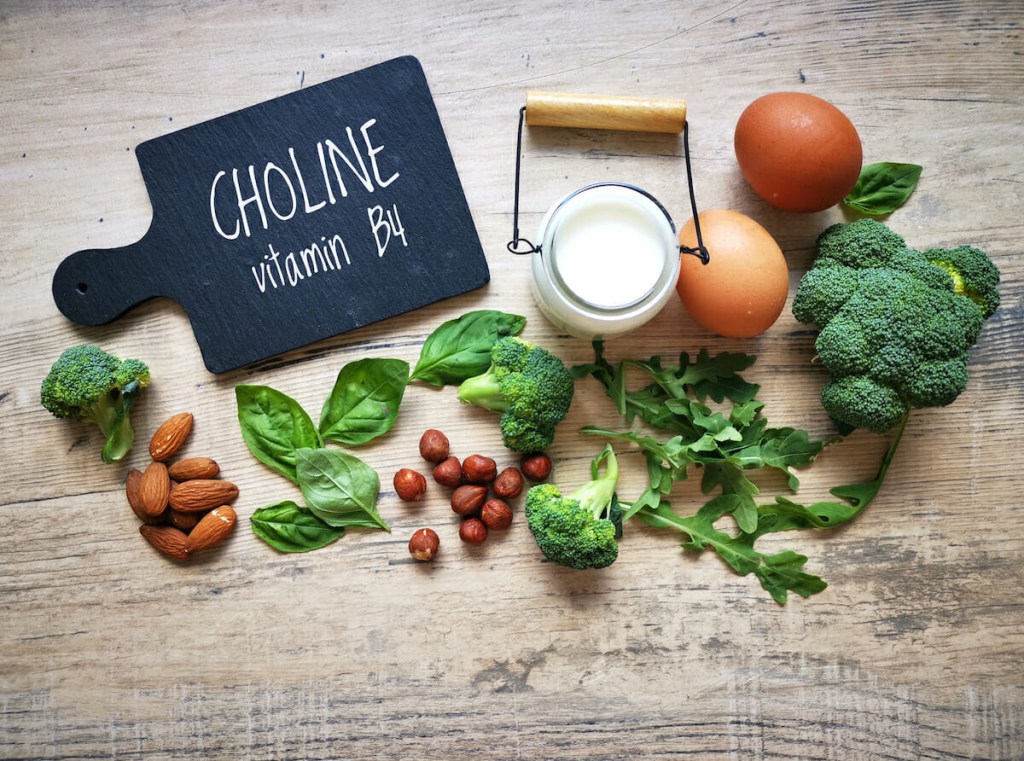
Choline can be found in a variety of foods, making it accessible for everyone. Leading the pack are eggs, particularly the yolks, earning them the title of choline champions. Other rich sources include beef liver, chicken, fish, and dairy products. For those on a plant-based diet here are some choice Brussels sprouts, broccoli, and peanuts also offer a good dose of this essential nutrient.
How much should you be taking in?
The recommended minimum intake of choline varies by age, gender, and life stage. For adults, men should aim for 550 mg per day, while women should target 425 mg. Pregnant and breastfeeding women need more, around 450 mg to 550 mg daily, to support fetal and infant brain development. A large egg contains 147–164 mg of choline. 3 ounces (85 grams) of salmon contains 187 milligrams (mg) of choline.
Does Choline help with cognitive function?
Choline is a superstar when it comes to brain health and cognitive function. It plays a pivotal role in memory, mood regulation, and muscle control. The body uses choline to produce acetylcholine, a neurotransmitter that’s essential for brain communication. Studies have shown that adequate choline intake can improve memory, mood, and cognitive function, making it a key nutrient for brain health. Many people take supplements of choline and these can act as nootropics – substances that boost brain power!
What type of supplements are available?
For those looking to give their brain an extra boost, supplements like Citicoline and Alpha GPC offer concentrated forms of choline that can cross the blood-brain barrier more effectively. These supplements have been shown to enhance memory, cognitive function, and even aid in recovery from brain injuries. They are part of a group called “nootropics” that is to say substances that enhance brain function. I myself often take citicoline and sometimes alpha GPC and find that it does help brain power in a variety of ways. As a note of caution, there is some concern that choline can increase our gut microbiome. Certain gut bacteria have been known to release potentially harmful molecules. Keeping the gut microbiome balanced is key here. Some say taking garlic with the choline supplements can offset the harmful bacteria in our gut
What does the science show?
A study published in the American Journal of Clinical Nutrition found that higher choline intake was associated with improved cognitive performance.
Research in the Journal of Neuroscience reported that choline supplementation during pregnancy can boost fetal brain development and lead to lifelong memory enhancement.
A clinical trial in the European Journal of Neurology demonstrated that Citicoline improves memory and cognitive function in patients with cognitive impairments.
The final verdict?
So, choline is not just another nutrient; it’s an essential player in our overall health, particularly brain health. By including choline-rich foods in your diet or considering supplements, you’re not just feeding your body; you’re nurturing your brain to ensure it functions at its best.


Leave a comment