Published December 5, 2024
Why do some people, as they age, find calcium in all the wrong places? Weak bones but calcium deposits lining their arteries—a paradox that leaves both systems worse off. Could there be a missing factor, a kind of “traffic cop” directing calcium where it belongs? Emerging research suggests that this vital nutrient might be Vitamin K2.
The Calcium Paradox: A Molecular Traffic Cop
Calcium is essential for strong bones and a healthy cardiovascular system, but its placement is everything. Too much calcium in the arteries leads to stiffness and plaque, while insufficient calcium in the bones leads to osteoporosis. Vitamin K2 acts as a molecular traffic signal, directing calcium away from soft tissues like arteries and into the bones where it strengthens the skeletal framework.
At the molecular level, Vitamin K2 activates two key proteins:
- Osteocalcin, which binds calcium to bone.
- Matrix Gla-protein (MGP), which inhibits calcium deposition in the arterial walls.
Without sufficient Vitamin K2, these proteins remain inactive, leaving calcium free to wreak havoc in your arteries while your bones go brittle.
Dr. Weston Price: A Quest for Health Secrets
Dr. Weston Price, a dentist in the early 20th century, traveled the world studying indigenous diets and their impact on health. He noticed that populations with strong teeth, jaw structures, and overall bone health often consumed nutrient-rich, unprocessed diets. Price identified what he called “Activator X,” a mysterious fat-soluble nutrient critical for skeletal and dental health. Modern research strongly suggests that Activator X is Vitamin K2.
This aligns with the role of Vitamin K2 in calcium metabolism and bone integrity. Without adequate K2, even a diet rich in calcium and Vitamin D might fail to build strong bones.
A Lesson from Japan: Natto and Longevity
Japan offers compelling evidence of Vitamin K2’s benefits. The fermented soybean dish natto, a dietary staple in certain Japanese regions, is one of the richest sources of K2 (specifically the MK-7 form). Studies reveal that areas with higher natto consumption have:
- Lower rates of cardiovascular disease.
- Stronger bone health, with reduced fractures and higher bone density.
An analysis of regional data shows an overlap between natto consumption and better cardiovascular and skeletal outcomes. Coincidence? Probably not. A typical daily serving of natto provides approximately 200–300 mcg of Vitamin K2, far exceeding the average Western intake.
Why We Don’t Get Enough Vitamin K2
In Western diets, Vitamin K2 is scarce. While hard cheeses like Gouda and some fermented foods contain small amounts (1–2 mcg per serving), it pales in comparison to the levels found in natto or supplements. To match the Japanese intake, you’d have to consume large quantities of these foods daily—a near impossibility for most people.
This gap in the modern diet has led to a rise in supplements, particularly those combining Vitamin D3 and K2. These two nutrients work synergistically:
- Vitamin D3 increases calcium absorption from the gut.
- Vitamin K2 ensures that calcium is deposited where it’s needed—bones—and not in soft tissues.
A common dosage recommendation is 100 mcg of K2, though this remains an estimate as optimal levels for long-term health are still under investigation.
Beyond Bones and Arteries: Emerging Benefits of K2
While Vitamin K2’s role in calcium management is well-established, new research hints at other potential benefits:
- Brain Health: Studies suggest that K2 may reduce oxidative stress and support mitochondrial function in the brain, offering possible protective effects against neurodegenerative diseases.
- Overall Longevity: A study published in Nutrition reported associations between higher Vitamin K2 intake and reduced mortality from all causes.
These findings are exciting, though more research is needed to solidify K2’s full spectrum of benefits.
How to Get More Vitamin K2
If you’re not ready to embrace natto’s strong flavor, here are other options:
- Fermented Foods: Some cheeses (like Gouda and Brie) and fermented vegetables offer small amounts.
- Supplements: Many products now pair Vitamin D3 with K2, providing 100–200 mcg per serving in an easy-to-take form.
- Foods to Watch: Organ meats, egg yolks, and grass-fed butter contain minor amounts but won’t meet daily needs on their own.
Final Thoughts: Calcium’s Best Friend
Vitamin K2 is emerging as a critical nutrient for health, acting as a “traffic cop” to direct calcium away from arteries and into bones. While the science is still evolving, its benefits for bone health, cardiovascular health, and potentially even brain health make it a nutrient worth prioritizing. Also vitamin K2 is very safe, for example very high amounts have experimentally been given to people with no adverse effects.
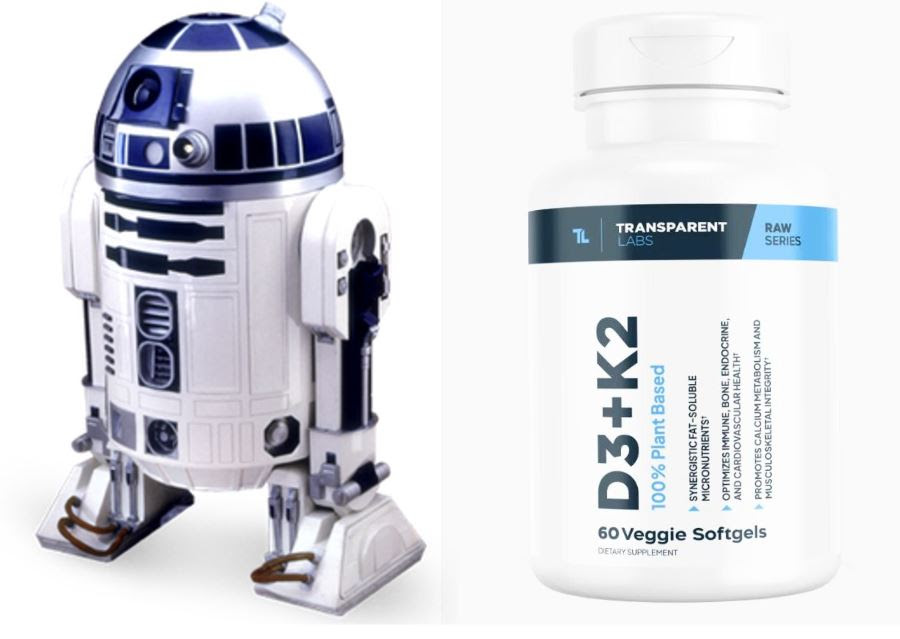
In the end, achieving sufficient Vitamin K2 through a combination of diet and supplementation could be the key to helping maintain strong bones and clear arteries. Vitamin D3 plus K2 is now readily available, and might be the best choice the next time you need to purchase some of the sunshine vitamin. D3 K2 might just be the dynamic duo we’ve been looking for… now we just need a health invention that matches C3PO — maybe…
- C – Cardio
- C – Clean eating
- C – Core Strength
- P – Play (Engage in fun, active, and social activities for physical and mental health)
- O – Optimal Sleep?
- Please feel free to write in your suggestions…


Leave a comment