Where to Wear the Wearable?
How About the Wrist!
Published September 7, 2024
With the advent of modern technology, the boundaries between health care and consumer electronics are increasingly blurred. Smartwatches and other wrist-worn devices, once regarded as fitness trackers, are now powerful tools for monitoring various physiological parameters. These devices are gaining recognition as adjuncts in medical settings, allowing users and clinicians to track vital health metrics continuously. Let’s explore how smartwatches and wearable monitors are influencing the field of health care, with a focus on sleep tracking, heart rate monitoring, atrial fibrillation detection, heart rate variability (HRV), and exercise tracking. Also what’s the future of these wearables? Let’s look into it.
Sleep Monitoring: Beyond the Polysomnogram?
Sleep is a vital component of health, and disturbances in sleep patterns can indicate various underlying medical conditions, such as insomnia, restless leg syndrome, or obstructive sleep apnea (OSA). Traditionally, the gold standard for diagnosing these conditions has been a polysomnogram (PSG) performed in a sleep lab. However, this procedure is costly, inconvenient, and typically involves a single night of monitoring, which may not capture an individual’s habitual sleep behavior.
Smartwatches equipped with advanced sensors now offer the potential to monitor sleep continuously in a home environment, tracking metrics like total sleep time, sleep stages (light, deep, REM), and movement throughout the night. As the technology advances, these devices are becoming nearly equivalent to traditional PSG in detecting sleep disorders. For example, wearable monitors with oxygen saturation sensors and accelerometers can help identify patterns consistent with OSA, a condition characterized by repeated pauses in breathing during sleep. While not yet a definitive diagnostic tool, smartwatches could serve as a preliminary screening method. They may alert users to the need for further testing, thereby accelerating the path to diagnosis and treatment. Importantly, early detection of conditions like sleep apnea can prevent complications such as hypertension, cardiovascular disease, and impaired cognitive function.
Heart Rate Monitoring: A Window into Cardiovascular Health
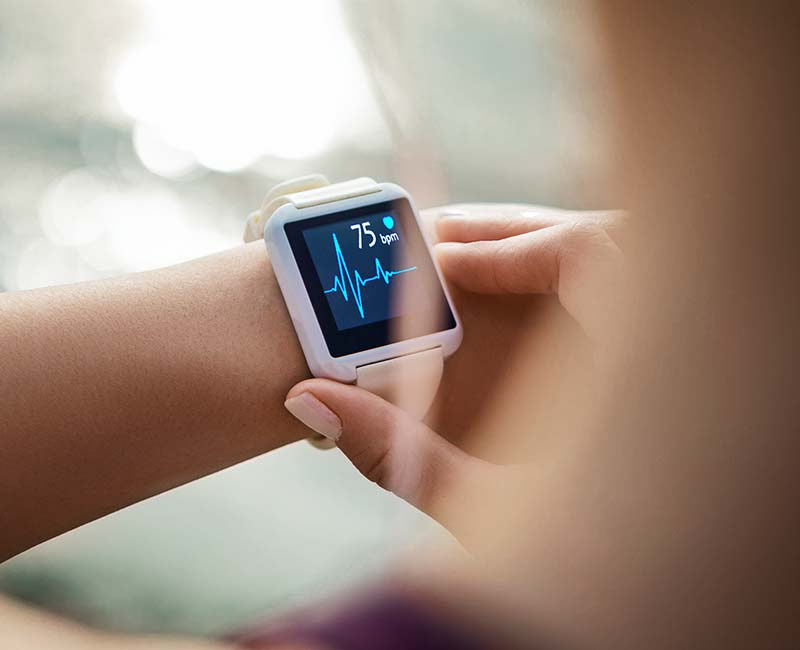
Heart rate monitoring is one of the most widely used features in modern smartwatches. These devices measure heart rate continuously or intermittently, using optical sensors to detect blood flow beneath the skin. For many users, tracking heart rate can provide valuable insights into cardiovascular health, fitness levels, and overall well-being. But from a clinical perspective, the data from heart rate monitoring can be crucial for identifying early signs of arrhythmias or other cardiac abnormalities.
A particularly useful application is in the diagnosis of tachycardia, bradycardia, and other heart rate irregularities. For example, a user with consistently elevated resting heart rates may be at risk of cardiovascular disease, while those with abnormally low heart rates could be suffering from bradycardia, which requires medical attention.
Heart Rate Variability: A Metric for Recovery and Autonomic Health
Another important cardiovascular metric available in many smartwatches is heart rate variability (HRV), which refers to the variation in time intervals between heartbeats. HRV is an indirect measure of autonomic nervous system function, particularly the balance between sympathetic (fight or flight) and parasympathetic (rest and digest) activity. A higher HRV is typically associated with better cardiovascular health, reduced stress, and improved recovery from exercise or illness.
In medical contexts, HRV has been studied as a predictor of outcomes in various conditions, including heart failure, myocardial infarction, and even psychological stress disorders. By providing real-time feedback on HRV, smartwatches can help individuals make informed decisions about rest, recovery, and exercise intensity, optimizing their physical and mental health. In the future, we may see HRV data used more extensively to guide therapeutic interventions for stress-related disorders, post-surgery recovery, and even chronic disease management.
Atrial Fibrillation Detection: The Apple Watch’s Medical-Grade Capabilities
Atrial fibrillation (AFib), the most common type of arrhythmia, significantly increases the risk of stroke and heart failure. The early detection of AFib is critical for initiating treatment and reducing the risk of serious complications. Remarkably, the Apple Watch and other advanced smartwatches have integrated electrocardiogram (ECG) functionality, allowing users to take medical-grade readings of their heart rhythm.
The Apple Watch, in particular, has received FDA clearance for its AFib detection capabilities. By capturing an ECG from a user’s wrist and analyzing the heart rhythm, the watch can detect signs of AFib and prompt the user to seek medical attention. This represents a significant leap forward in the democratization of medical-grade diagnostics, bringing life-saving technologies into the hands of consumers. While smartwatch-detected AFib is not a substitute for a formal medical diagnosis, it serves as an invaluable early warning system, potentially catching arrhythmias that would otherwise go unnoticed.
Exercise Tracking: GPS and Beyond
Smartwatches are also widely used for tracking physical activity, with features like GPS, accelerometers, and gyroscopes to monitor movement. For athletes and fitness enthusiasts, these devices provide essential data on metrics such as distance, speed, elevation, and calorie expenditure. But beyond sports performance, exercise tracking offers health benefits for individuals with chronic conditions like diabetes, obesity, or cardiovascular disease, where regular physical activity is critical for disease management.
Moreover, GPS tracking in smartwatches can help individuals engage in location-based health interventions, such as outdoor exercise programs designed to improve cardiovascular health.
The Future of Wearable Monitors: A Wrist-Based Medical Revolution
As the technology behind wearable monitors evolves, the future holds even greater promise for integrating these devices into clinical practice. Emerging sensors are being developed to monitor blood pressure, glucose levels, and even hydration status, potentially reducing the need for invasive procedures like blood tests. Artificial intelligence algorithms are likely to play an increasingly important role in interpreting data, offering personalized health recommendations based on an individual’s unique physiology.
So overall smartwatches and wearable monitors are transforming the way we approach health care, making continuous, real-time monitoring accessible to millions. Some of the data that you collect might be helpful for me as your physician to help guide your health care plan. However, sometimes too much data can actually distract from the heart of a healthcare plan. That date it would be more for you personally as a feedback tool. Whether or not I need your data would be on a case-by-case basis. (In other words please do not send me mounds of data from your smartwatch unless requested!)
From sleep tracking to atrial fibrillation detection, these devices have the potential to revolutionize preventive medicine, providing early warnings for conditions that might otherwise go undetected. While there are limitations to their accuracy and clinical application, the future of wearable health monitoring is exciting. The day is not far off when a simple device on the wrist could serve as a comprehensive diagnostic tool, changing the landscape of health care.


Leave a comment