Published March 19, 2026
“Whether it is nobler in the mind to suffer the slings and arrows of outrageous fortune…” — Hamlet
Alfred Nobel’s invention was dynamite! (…literally he invented dynamite).
Dynamite is essentially nitroglycerin — a violently unstable liquid explosive — stabilized by absorbing it into a porous material so it could actually be handled safely. He could see the good — creating tunnels, mines, clearing land — but he could also see the bad: wars, destruction. He was wracked with a sense of guilt over what he had unleashed on mankind. So to offset this, he used the proceeds of his invention to create the Nobel Peace Prize (and the other prizes). But there is a medical twist here that often goes unnoticed.
The men working in the dynamite factories started noticing something strange. When they went to work and got nitroglycerin on their hands, their chest pain — their angina — went away. But during the weekend it would creep back. Return Monday to work, and it eased again. Eventually they figured it was the nitroglycerin itself, getting absorbed through the skin and doing something remarkable.
It caught on — physicians took nitroglycerin, made it into a gel or patch, put it on the body, and it worked brilliantly. Angina: gone. How? It made the blood vessels relax. Crisis averted. But no one could explain how it worked. A century went by — still a mystery.
Finally, three men found the answer. Robert Furchgott, Louis Ignarro, and Ferid Murad worked tirelessly and hunted down a very elusive molecule — one so small, so fleeting, with a half-life measured in milliseconds — like a ghost that vanishes the instant you look at it. The molecule was NO (nitric oxide). It was all the way in 1998 when these three men finally proved that NO was produced in the body and was profoundly important. Can you guess what prize they were awarded for this discovery? You got it — the Nobel Prize in Physiology or Medicine (coming full circle). What did nitric oxide do? It was a critical signaling molecule in the cardiovascular system. NO became famous — Science magazine named it “Molecule of the Year.” Now everyone is talking about it… or are they? It is a bit complicated.
First Complexity — A Tale of Two Pathways
There are two main ways your body makes NO, and both matter enormously for your heart and vessels. Think of them as two different factories producing the same essential product.
Pathway 1: The eNOS Factory (your inner self)
Living on the inner lining of your blood vessels — arteries, veins, and tiny capillaries alike — are endothelial cells. Collectively, if you spread them flat, they’d cover roughly six tennis courts. Every single one of those cells has a factory called eNOS (endothelial nitric oxide synthase). These are your little NO generators, running quietly day and night. They take a simple amino acid — L-arginine — combine it with oxygen, and crank out nitric oxide. The result? Even though NO is fleeting, it does dramatic things: it causes your vessels to become supple and relaxed, lowering blood pressure. Your platelets don’t clump, plaque doesn’t stick. Your blood vessels stay healthy, keeping artery disease at bay.
The BH4 Switch — and Why It Fails
Here’s where it gets fascinating. eNOS doesn’t work alone. It requires a cofactor called BH4 (tetrahydrobiopterin) to function properly. Think of BH4 as a tiny switch that keeps eNOS in “coupled” mode — producing NO like it should. If BH4 gets broken down into BH2 (not good), eNOS becomes “uncoupled” and stops functioning. In fact it gets worse — once eNOS is uncoupled, not only is there no NO, it starts making a harmful molecule called superoxide instead. Superoxide can actually damage the lining of your blood vessels.
So what causes BH4 to unfortunately turn into BH2? Many things — aging, high blood sugar, smoking, chronic inflammation, processed foods. BH2 then sits in the eNOS binding site and crowds out the remaining BH4, making things even worse. It’s a vicious spiral.
Aging is particularly brutal here. As we get older, oxidative stress accumulates, BH4 levels fall, and eNOS uncoupling increases. Your once-efficient NO factory sputters, produces less NO, and makes more damaging superoxide instead. This is one of the central mechanisms behind age-related arterial stiffening, rising blood pressure, and cardiovascular risk.
So What Can We Do? Vitamin C — “An Orange a Day Keeps the Cardiologist Away”
Now we arrive at something really interesting.
Did you know that most animals on earth — dogs, cats, goats, horses — manufacture their own vitamin C? A typical adult goat produces over 13,000 mg of vitamin C per day as a baseline — and ramps up even higher under stress. Dogs and cats do the same. And here is the interesting thing: carnivores like dogs and cats that synthesize their own vitamin C are remarkably resistant to atherosclerosis compared to humans. You can feed them a high-fat, high-cholesterol diet and plaques really don’t develop the way they do in us. Now, to be fair — they are not completely immune, and when they do get atherosclerosis it is usually tied to underlying metabolic disease like hypothyroidism or diabetes. But the contrast with humans is striking. It raises a real question: is constant internal vitamin C production part of that protection?
Humans actually have the gene to synthesize vitamin C — but it’s damaged beyond repair. For you science geeks, the enzyme we are supposed to have is called L-gulonolactone oxidase (GULO). But we don’t have it. So we have to eat oranges or we get scurvy. In fact, some scientists (like Linus Pauling) think that unless we are regularly getting vitamin C throughout the day, we quickly fall into a low-level state of scurvy — and BH2 starts to pop up really fast.
Linus Pauling — two-time Nobel laureate and one of the greatest chemists of the 20th century — became fascinated by this problem. After winning his two Nobel prizes he did a deep dive into vitamin C. He himself took a lot of it throughout the day to simulate the internal environment of goats or elephants. Pauling lived to 93 and did not have cardiovascular disease — though in fairness, he did ultimately die of prostate cancer. So vitamin C was not a magic bullet. But his cardiovascular system held up remarkably well.
Here’s the biochemical link. Vitamin C appears to be an important supporter of the whole eNOS-BH4-NO system. It reduces oxidative stress, helps preserve BH4 availability, and in some studies improves endothelial function. Now — to be precise — vitamin C is not the only thing involved in BH4 recycling… but it sure does help
Also, unlike animals that generate a constant internal supply, we depend entirely on dietary intake of vitamin c. But it doesn’t last long in the body once we ingest it -— your kidneys begin clearing it from your bloodstream within two hours. There is also no storage depot. So should we spread it out throughout the day? An orange here, a red pepper there?
The vitamin C studies are mostly done on a once-daily bolus — for example, 500 mg once a day — and they have shown underwhelming results for prevention. So could it be that we should take our vitamin C across the day ? the idea seems to make sense? I could not find a clinical trial that specifically tested three-times-daily ingestion of oranges or red peppers – but at the very least we know these foods are healthy for us from other research. Also i think it would be really cool to study a multiday dosing of vitamin c to see if the eNOS system hold up better and peoples arteries improve
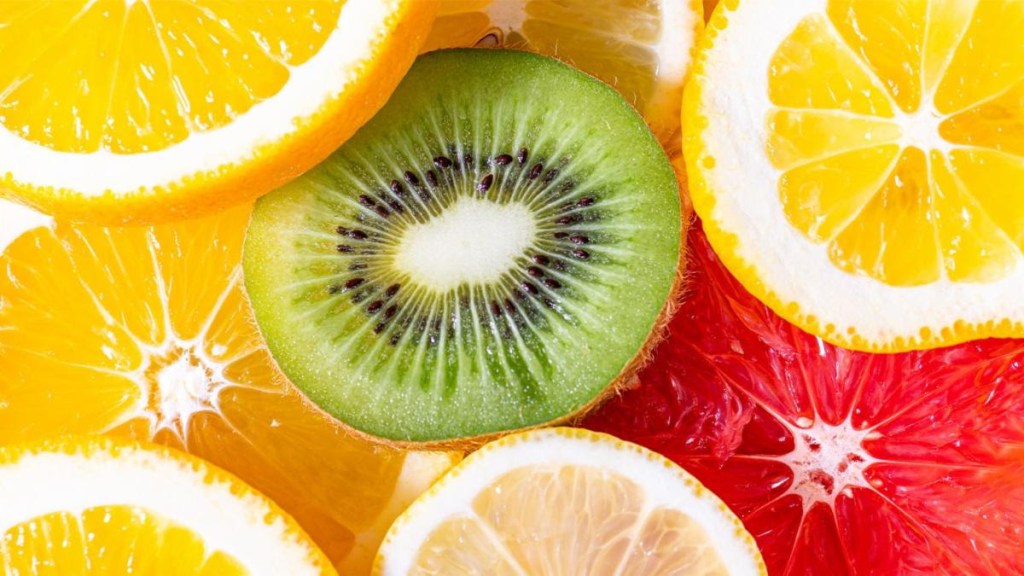
So maybe three oranges a day keeps the cardiologist away is the new saying? (time and research will tell) … here is the vitamin c content of various foods.
Fruits:
Guava (1 medium) — ~228 mg
Kiwi (1 medium) — ~71 mg
Papaya (1 cup) — ~88 mg
Strawberries (1 cup) — ~85 mg
Orange (1 medium) — ~70 mg
Pineapple (1 cup) — ~79 mg
Mango (1 cup) — ~60 mg
Grapefruit (half) — ~44 mg
Vegetables:
Red bell pepper (half, raw) — ~95 mg
Yellow bell pepper (half, raw) — ~137 mg
Green bell pepper (half, raw) — ~60 mg
Broccoli (1 cup, raw) — ~81 mg
Brussels sprouts (1 cup, cooked) — ~97 mg
Kale (1 cup, raw) — ~80 mg
Cauliflower (1 cup, raw) — ~52 mg
Tomato (1 medium) — ~17 mg
Next time we will look at another pathway for NO production – beet juice anyone?
Blessings, Dr. Jeff Ponke, MD


Leave a comment