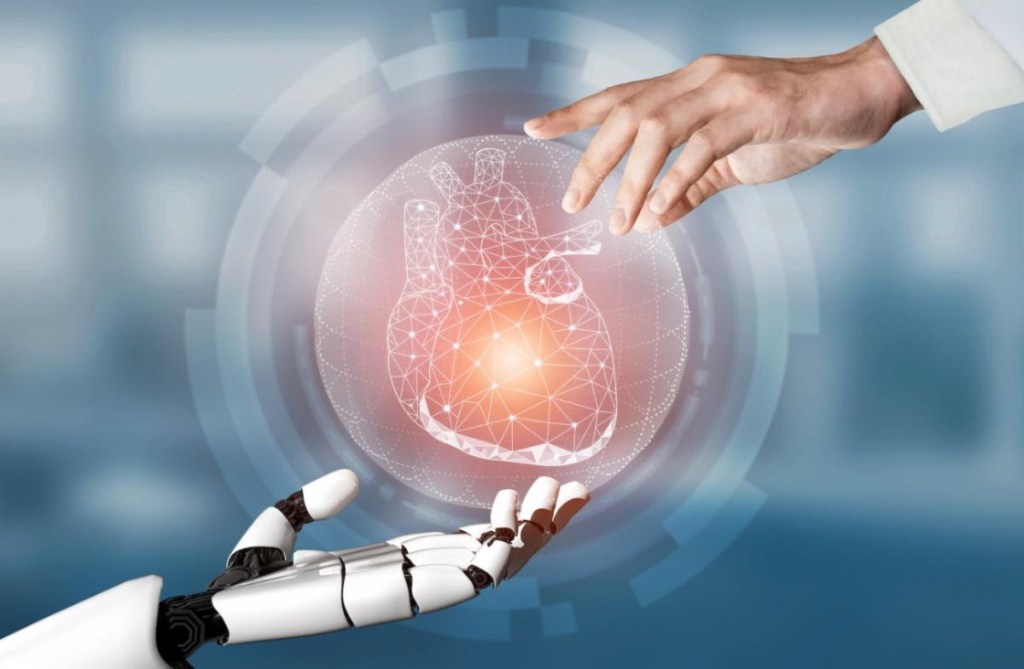
There is an AI revolution taking place
Published August 23, 2025
We are living through one of the most fascinating periods in human history. The emergence of artificial intelligence is revolutionizing every field of human endeavor, and medicine stands at the forefront of this transformation. It truly seems like this remarkable discovery could change everything – including healthcare.
Old AI
For decades, artificial intelligence faced significant limitations. I’m no programmer, but I’ve read that early AI systems relied on complex rule-based programming that lacked flexibility and sophistication. It was ok for basic tasks, but didn’t have any real intelligent behavior. Programming these old AI models required enormous amounts of carefully structured data and even then could only handle relatively simple pattern recognition. For example, language translation programs produced awkward, often meaningless results. Also image recognition was primitive at best. The field of AI research was marked by gradual progress over years and years with almost no breakthroughs until one day…
The 2017 Revolution: “Attention Is All You Need”
Everything changed in 2017 when eight researchers at Google labs worked for months on a new approach. Other computer scientists said their approach would never work and that they were barking up the wrong tree. But work it did (in a massive way!). They published a landmark paper titled “Attention Is All You Need.” This literally changed everything. This wasn’t just another small improvement – it was a complete paradigm shift that would transform artificial intelligence forever. We are living now through this revolution.
The researchers called the new way of building AI “Transformer architecture”. Instead of reading information step by step, it could look at everything at once and figure out how words and ideas connect. That’s what put the “T” in ChatGPT.
Then they fed it mountains of data—books, articles, internet text—and it started learning in a way that felt almost human. The result? A technology that can understand language, translate, write, and even hold conversations.
But it didn’t stop at words. The same methods are now being used in medicine. AI systems can scan chest X-rays and catch details radiologists might miss. They can look at retinal photos and diagnose eye diseases with accuracy good enough for FDA approval. And they keep getting better, fast.
Why Medicine Needs AI
Doctors face an impossible task: millions of medical papers come out every year! No one can read, let alone process, all of them. AI, on the other hand, can comb through that ocean of data, connect the dots, and surface insights a human might never notice.
That’s already happening. The medical community is moving towards using AI as a “second opinion” when making a diagnosis or helping to quickly write medical notes after a patient visit—freeing up time to actually focus on their patients. AI can even look at genetic markers to suggest cancer treatments or predict protein shapes to help design new drugs.
Where It’s Headed
We’re just scratching the surface. Soon, AI could pull together lab results, scans, genetic tests, and patient history to give doctors a clearer picture of someone’s health than ever before. Treatments may also be more personal—designed for the exact genetic makeup of a patient’s cancer or illness for example. Rare diseases might be spotted faster and hopefully caught before it’s too late.
Partner, Not Replacement
AI isn’t here to replace doctors. People still need the human side of medicine—the compassion, discernment, and trust. AI should handle the data overload and find the patterns, leaving doctors free to do what matters most—caring for patients.
Of course, there are risks. Some experts warn about AI developing beyond our control. Used wisely, AI could mark one of the biggest shifts in medical history—helping us care better, diagnose faster, and discover treatments we never thought possible.
God bless,
Dr. Ponke


Leave a comment