A Game-Changer May Finally Be Here
Published October 22, 2025
“Doctor, is there a blood test that can just check me for cancer?”
For decades, I’ve had to give patients the same disappointing answer: “No, there’s no single blood test for cancer. We can test for specific things like PSA for prostate or tumor markers for certain cancers, but there’s no comprehensive cancer screening blood test.”
Well, that may have just changed.
The Question That Started It All
As a family physician, I field this question often. Patients want what seems perfectly reasonable – a simple blood draw that could detect cancer early, when it’s most treatable. They see how we can test blood sugar for diabetes or cholesterol for heart disease and wonder why cancer has to be so complicated.
The reality has always been that cancer screening requires uncomfortable, expensive procedures. Mammograms every year or two. Colonoscopies every decade. Pap smears. Each test screens for just one type of cancer, and many cancers have no screening tests at all.
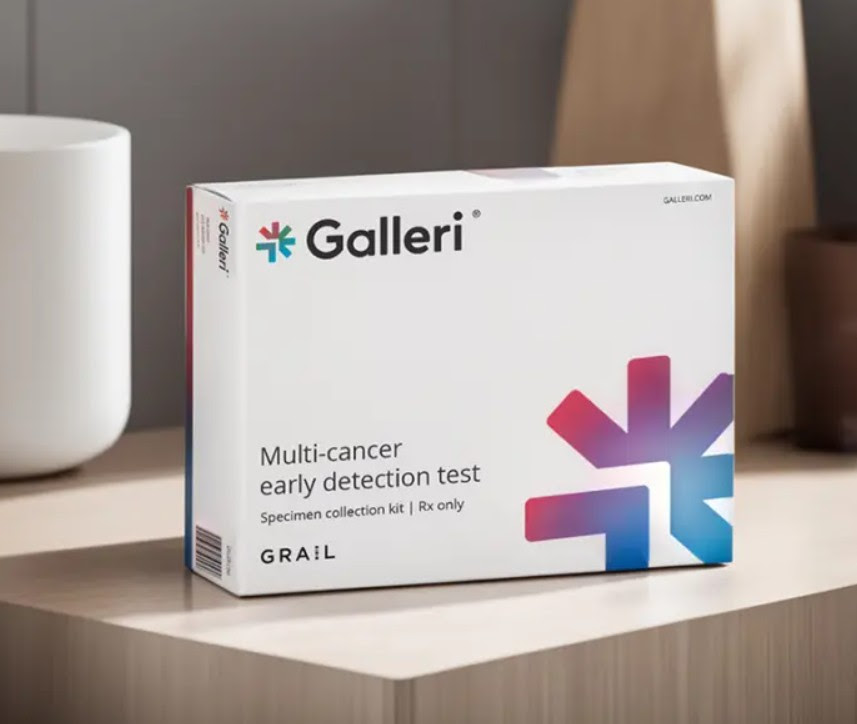
But what if I told you a company called GRAIL has developed what might be the Holy Grail of cancer screening – a single blood test that can detect over 50 types of cancer with remarkable accuracy?
The Science Behind the Breakthrough
The technology behind this potential game-changer involves something called liquid biopsy and epigenetic markers. Let me break this down in simple terms.
Every cancer, as it grows, sheds tiny fragments of DNA into the bloodstream. These fragments carry a special signature called methylation patterns – think of them as molecular fingerprints that are unique to cancer cells. Scientists call this “circulating tumor DNA”, or ctDNA.
For years, researchers knew this ctDNA existed, but the challenge to monitor it was enormous. Imagine trying to find a few drops of red dye in an Olympic-sized swimming pool – that’s essentially what detecting cancer DNA in blood was like. The signal was there, but it was incredibly faint and easily missed.
GRAIL’s Galleri test uses advanced next-generation sequencing and machine learning to detect these methylation patterns. The test doesn’t just find cancer – it can predict where in the body the cancer is likely located with 92% accuracy. This is revolutionary because it means doctors know where to look for follow-up testing.
From Theory to Reality: The Clinical Evidence
The concept of liquid biopsy has been around since the early 2000s, but only in the last decade has the technology become sophisticated enough to work reliably. GRAIL, founded in 2015, has conducted some of the largest cancer screening studies ever undertaken.
The first major study, called PATHFINDER, enrolled over 6,600 participants and showed promising results. But the recent PATHFINDER 2 study has truly blown the doors off our expectations. Hot off the press – these results were just published on October 17, 2025!
PATHFINDER 2 enrolled 35,878 adults over 50 with no symptoms of cancer. When the Galleri test was added to standard screening (mammograms, colonoscopies, etc.), cancer detection increased more than seven-fold. Let me repeat that – seven times more cancers were found.
Even more impressive: 61.6% of positive tests were confirmed to be cancer. Compare this to mammograms, where only about 10-30% of abnormal results turn out to be cancer, or PSA tests, where the rate is even lower at around 25%.
The test showed 99.6% specificity, meaning false positives occurred in only 0.4% of cases. This is extraordinarily low – much better than our current screening methods.
The UK Validation Study
Not content with US data alone, GRAIL partnered with England’s National Health Service for an even larger study. The NHS-Galleri trial enrolled over 140,000 participants and final results are expected in 2026. This massive study will provide additional validation and may be the key to widespread adoption. They are hoping to see in this study, not only can we detect cancer early, but this will translate into lives saved.
The fact that a government health system as rigorous as the UK’s NHS chose to study this technology speaks volumes about its potential.
Beyond Current Screening: A New Paradigm
What makes this truly exciting is how it could transform cancer care. Currently, we have Ok screening tests for only a handful of cancers – breast, colon, cervical, lung (for smokers), and prostate. But these represent just a fraction of all cancers.
Pancreatic cancer, ovarian cancer, liver cancer – some of our most deadly cancers have no effective screening tests. By the time symptoms appear, it’s often too late. The Galleri test detected these hard-to-screen cancers, with over half found at early stages when treatment is most effective.
Think about it: instead of multiple uncomfortable procedures spread over years, patients could have one blood draw annually that screens for most cancers simultaneously.
The Reality Check: Where We Stand Today
Before we get too excited, let’s address the current limitations. The Galleri test costs around $949 and is not yet covered by insurance. It’s available as a laboratory-developed test, but GRAIL is working toward FDA approval, expected in 2026.
The test isn’t perfect. It misses some cancers (sensitivity of 40% for all cancers, though 74% for the deadliest ones), and while false positives are low, they still occur. A positive result requires follow-up testing to confirm and locate the cancer.
Currently, this test is most appropriate for people over 50 at average cancer risk, particularly those who want comprehensive screening beyond standard tests.
The Future of Cancer Detection
I believe we’re witnessing the beginning of a fundamental shift in how we approach cancer screening. Just as cholesterol testing became routine for heart disease prevention, liquid biopsy may become the new standard for cancer detection.
The implications extend beyond just finding cancer earlier. If we can detect cancer when it’s most treatable, we may dramatically reduce cancer deaths while also reducing the cost and suffering associated with late-stage cancer treatment.
For my patients who have been asking about a blood test for cancer, I may soon have a very different answer. While we’re not quite there yet, the technology is advancing rapidly, and the clinical evidence is increasingly compelling.
The question “Is there a blood test for cancer?” may soon be answered with a resounding “Yes.”
What This Means for You
While not yet FDA-approved or insurance-covered, it is now available for those who want additional screening beyond the standard tests. Remember, it supplements rather than replaces current screening methods and more data is still to come. If you decide to purchase this test they mail you the test kit and we can draw the labs in the office here for you if you wish.
I truly believe this test could change the future of cancer screening, helping us catch dangerous cancers early, when they’re most treatable. Please let me know if you have any further questions about this.


Leave a comment