Published March 5, 2026
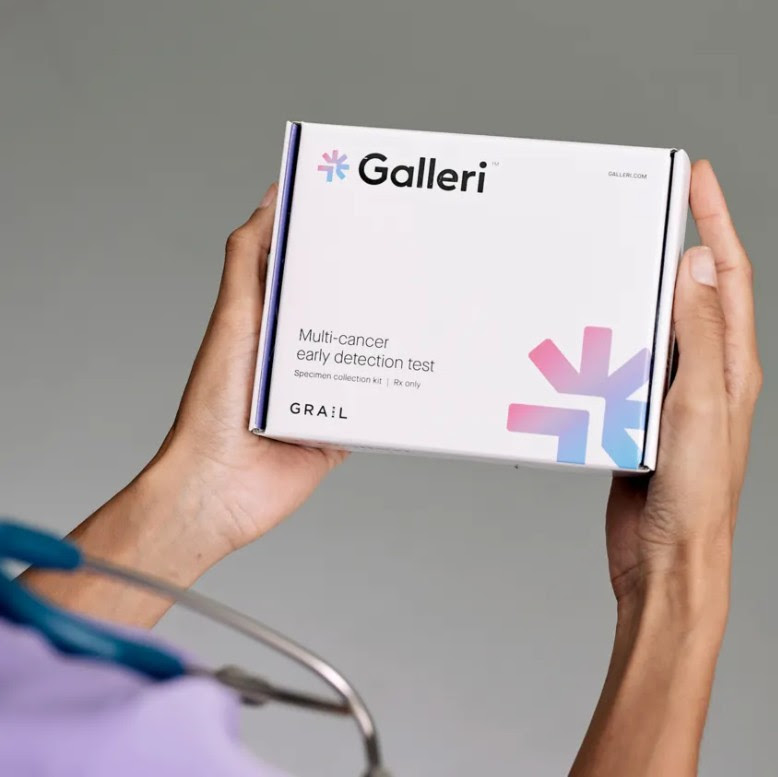
A little while back, I wrote to you about something I found genuinely exciting in the world of cancer screening. The question I raised was a simple one, but it has haunted medicine for decades: is there a single blood test that could detect cancer early, across many different cancer types, before symptoms appear? That idea now has a name. It is called a multi-cancer early detection test, or MCED, and the leading version in this space is called the Galleri test, made by a company called GRAIL.
This past February, results came in from the largest clinical trial ever run on this technology. The NHS-Galleri trial enrolled over 142,000 people in England, aged 50 to 77, and followed them for three years. Half got the Galleri blood test annually on top of their standard care. Half did not. The question was simple: would the screened group end up with fewer late-stage cancers?
Did It Work?
The headlines said the trial failed. However, I think there is more to the story than the headlines – much more and requires diving into some numbers.
First, the screened group had four times the cancer detection rate compared to standard care alone. They found substantially more Stage I and Stage II cancers, the stages where treatment is most effective and outcomes are best.
And Stage IV cancer diagnoses, the most advanced and hardest to treat, dropped by more than 20% in years two and three of screening (total of the trial was 3 years only). The head of the company stated publicly that he was genuinely pleased with these results, and when you look at the data carefully, it is not hard to understand why.
So what technically failed? The primary endpoint was a statistically significant combined reduction in Stage III and Stage IV cancers together. That threshold was not reached. But here is where the biology gets interesting.
The Stage III Puzzle
In the first year of screening, Stage III cancer numbers were actually higher in the screened group. That sounds alarming until you think about what is really happening. The test swept through the population and found cancers that had been quietly growing, undetected, for years. Some of those were Stage III. They were always there. The test just found them for the first time. As the trial continued, the pipeline began to thin. Cancers that would have progressed to Stage III were being caught at Stage II instead. Stage IV continued to fall. The trend is moving in exactly the right direction as hoped. It could be that it just needed more time to reach statistical significance.
Here is a useful comparison: mammography screening programs and colorectal cancer screening would almost certainly show a similar pattern if you evaluated them at only three years. The mortality benefit from mammography did not become statistically clear until 5 to 8 years of follow-up in the landmark trials. But early on mammography could be seen as a failure, i.e. at year three.
The Galleri trial is being held to a standard that no established screening program in history has met at the same time point.
GRAIL has announced they are extending the trial by 6 to 12 months. Also they will present the details of the numbers/results at a major oncology conference in late May. Mortality analyses are planned at the 3 and 6 year marks. So the story is far from over.
Who Benefits Most Right Now?
The clearest candidates for this test today are people with a meaningfully elevated cancer risk. If you have a strong family history of cancer, particularly multiple relatives or diagnoses before age 60, your pre-test probability is higher and the test makes more clinical sense. Or perhaps If you carry certain genetic conditions this test becomes genuinely compelling because standard screening cannot adequately cover all the organs at risk – yet this test is multiorgan.
Looking ahead, researchers are working on polygenic risk scores, genetic tests that analyze hundreds of thousands of small variants across the genome to generate an overall cancer risk profile. Companies like Myriad, Invitae, and others are trying to create tests in this space. The vision, still a few years from being fully realized, is a two-step pipeline: identify elevated-risk individuals through genetic profiling, then offer those specific people annual MCED screening. That combination would dramatically improve the accuracy of the test and bring the cost per cancer detected down to a level that makes real population-level sense.
The Cost Question
The Galleri test currently costs around $950 out of pocket. (!) That can be pricey for a test that is likely to show – “no signal detected”. For a national program like Medicare or NHS (in UK) to adopt it broadly, the price would probably need to come down. Also the data showing saving lives would have to be compelling. There is also a legitimate question worth asking: for the same dollars, could we reduce cancer mortality more effectively through other means? The evidence for vigorous regular exercise reducing cancer risk and overall mortality is substantial. For 900 dollars could we hire a personal coach for everyone for the year and get them running? (maybe)
That said, for a patient who is at higher risk, whether by family history, genetic testing, or other factors, and who has the means to pursue it, I think there is a reasonable argument for annual/biannual Galleri screening. The test is detecting real cancers at earlier stages. Stage IV cancers are dropping. The technology appears to be working. The data is building. I tend to be an optimist – but I think given more time it will have a compelling story.
Well, If you think you might be a candidate for this conversation, we can discuss this at your physical. Again there is a lot of nuance and data still to come. Also the people most to benefit would be those who have increased risk (personal history, family history, age or toxic exposures). People with a high baseline risk may be interested in considering this test.
Blessings,
Dr. Jeff Ponke, MD


Leave a comment