Published April 3, 2026
Last time, we explored the endogenous nitric oxide pathway, how your own body produces this remarkable molecule using enzymes lining the walls of your blood vessels. That pathway is powerful, but it quietly degrades with age. Today we turn to the exogenous pathway: the outside and the good news here is that you have real control over it. Again just to recap why NO is so important (list benefits – lower bp, protect vessels, antiviral, antibacterial properties etc)
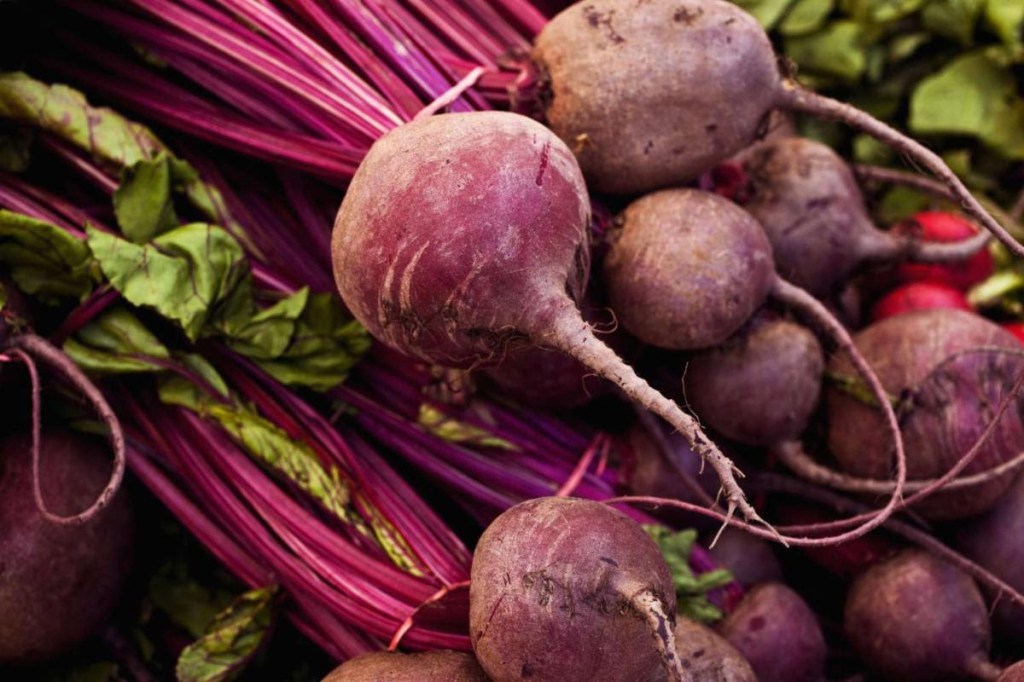
You Can’t Beet It
When you eat nitrate-rich foods such as beets, arugula, spinach, Swiss chard or celery your small intestine absorbs those nitrates directly into the bloodstream. But these are nitrates (NO₃), not nitric oxide itself. So how does the body bridge the gap? With an elegantly designed two-step system.
First, your salivary glands actively pull nitrates out of the bloodstream and concentrate them in saliva to levels up to 20 times higher than found in the blood.¹ So, a couple of hours after eating some beets your saliva becomes incredibly NO3 rich! The next step is crucial. The bacteria in our mouths are absolutely essential here. These bacteria living on the back of your tongue and throughout your mouth see the NO3 rich saliva and convert that into nitrite (NO₂). Next you swallow the NO2 and it hits the stomach. Here, acid partially converts it into actual nitric oxide (NO) which is then absorbed through the gut wall and delivered to your arteries.²
But there is also a second, faster route: some nitrite (NO2) is absorbed directly through the mucous membranes of the mouth and under the tongue (sublingual absorption) bypassing digestion entirely. That nitrite is then converted to NO in the bloodstream by hemoglobin itself, which under certain circumstances will convert NO2 to NO.³ So hemoglobin is not just carrying oxygen it is also quietly helping manufacture nitric oxide when your body needs it.
This has inspired a wave of supplement companies producing nitric oxide or nitrite lozenges designed to amplify this effect directly from the mouth. The concept is scientifically sound, but large-scale human trials are still lacking so the best evidence still points to good old vegetables as your most reliable source.
The whole system of eat, concentrate, convert, swallow, absorb is complicated but brilliantly designed. And unlike the endogenous pathway that silently degrades over decades, this one can remain robust throughout life if you protect it.
What to Avoid
This is where things get both surprising and practical.
If the oral bacteria are the conversion factory for this entire exogenous cycle, then anything that wipes out those bacteria breaks the system. Two culprits are worth knowing about.
Antiseptic Mouthwashes
A landmark study published in Free Radical Biology and Medicine demonstrated that using chlorhexidine mouthwash twice daily for just one week significantly raised systolic blood pressure and measurably reduced nitrite levels in saliva and plasma, essentially proving that killing the oral microbiome impairs your body’s ability to produce nitric oxide from food.⁴ You are, quite literally, gargling away a layer of cardiovascular protection.
Dr. Nathan Bryan, one of the world’s foremost nitric oxide researchers and author of The Nitric Oxide Solution, puts it plainly:
“If you use an antiseptic mouthwash, you can completely eliminate your ability to make nitric oxide from nitrate within 12 hours. The blood pressure-lowering effect of dietary nitrate is completely abolished by antiseptic mouthwash. These products should carry a warning label.”⁵
Safer alternatives that clean without decimating beneficial bacteria include xylitol-based rinses, oil pulling with coconut oil, warm salt water, and products like Dental Herb Company rinses. These support oral hygiene without torching the microbiome you depend on.
A Word on Fluoride
This is a nuanced conversation worth having honestly. Fluoride unquestionably reduces cavities that evidence is solid and decades deep. But fluoride is also antimicrobial, and at higher concentrations it does suppress oral bacterial populations, including some of the nitrate-reducing strains we need.⁶ The tradeoff is real, even if imperfectly quantified. Hydroxyapatite toothpaste is emerging as a promising alternative that remineralizes enamel through a different mechanism without the potentially harmful antimicrobial effects of fluoride. It is not yet proven to be a complete replacement for fluoride in high-risk patients, but has been shown to be at least not inferior to fluoride from recent studies.
Why This Matters More Every Year
As we reviewed last time, eNOS-driven nitric oxide production drops roughly ten percent per decade after age forty. By sixty, your endogenous system may be operating at half capacity. The exogenous pathway does not age the same way it remains responsive at any age. But only if you protect it.
So eat your veggies! Chew them well: chewing stimulates saliva flow and starts the cycle earlier. Protect your oral bacteria like the biochemical partners they truly are.
Blessings, Dr. Jeff Ponke, MD
Bonus: The Strange Science of Humming
Ok when I first heard this, I was not sure i believed it – but here it is – humming significantly boosts nitric oxide production. A study published in the American Journal of Respiratory and Critical Care Medicine found that humming increases nasal nitric oxide output by roughly fifteen-fold compared to quiet nasal breathing.⁷ I found out that the sinuses are in fact rich reservoirs of nitric oxide, and the oscillating airflow created by humming flushes that gas rapidly into the airways, where it is inhaled and absorbed.
Which raises an irresistible question: is this part of why some singers tend to live long lives? Tony Bennett performed into his nineties. Bill Gaither, one of the great voices in Christian music, is still going strong in his eighties. Obviously there are confounders, and let’s be honest some famous singers don’t live so long (but that may be other lifestyle choices they make). Overall though it makes me curious could there be some powerful biology happening by vibrating our sinuses as we sing? So it doesn’t hurt, take 5 minutes a day and sing to your hearts content! All that NO might make your heart really content after all.
Bonus, Bonus tip: Vitamin C Connection (once again).
When eating nitrate rich foods like beets, please add some Vitamin C to the meal. It can help prevent the formation of potentially harmful nitrosamines in the stomach, ensuring the nitrite converts to beneficial Nitric Oxide instead.
References
- Lundberg JO, Weitzberg E, Gladwin MT. The nitrate-nitrite-nitric oxide pathway in physiology and therapeutics. Nat Rev Drug Discov. 2008;7(2):156-167.
- Lundberg JO, Govoni M. Inorganic nitrate is a possible source for systemic generation of nitric oxide. Free Radic Biol Med. 2004;37(3):395-400.
- Cosby K, et al. Nitrite reduction to nitric oxide by deoxyhemoglobin vasodilates the human circulation. Nat Med. 2003;9(12):1498-1505.
- Kapil V, et al. Physiological role for nitrate-reducing oral bacteria in blood pressure control. Free Radic Biol Med. 2013;55:93-100.
- Bryan NS. The Nitric Oxide Solution. Neogenis Labs; 2012. (Interview and lecture content, widely cited in functional medicine literature.)
- Palmerini CA, et al. Nitric oxide release from saliva of healthy subjects after NaNO₂ administration and the effect of oral antiseptics. J Appl Toxicol. 2003;23(6):423-427.
- Weitzberg E, Lundberg JO. Humming greatly increases nasal nitric oxide. Am J Respir Crit Care Med. 2002;166(2):144-145.


Leave a comment