Published November 13, 2025
When you think about the ocean, what comes to mind? Probably waves, salt water, maybe some fish or plankton drifting along. For most of history, that’s what scientists thought too. The ocean was considered a relatively simple system – water, salt, and microscopic plants and animals floating around.
Then in the 1980s, researchers made a discovery that completely changed our understanding of marine ecosystems. The ocean isn’t just teeming with life. It’s absolutely packed with viruses!
How Many Are We Talking About?
Take a single milliliter of seawater – about the size of a raindrop. That tiny droplet contains somewhere between 1 million and 10 million viral particles. Think about that for a moment. One milliliter. Now consider that Earth’s oceans contain about 1.35 billion cubic kilometers of water.
Scientists estimate there are roughly 10 to the 31st power (that’s a 1 followed by 31 zeros) viral particles in the ocean at any given time. If you lined them all up end to end, they would stretch 10 million light years – far beyond our own galaxy. The ocean contains more viruses than there are stars in the known universe.
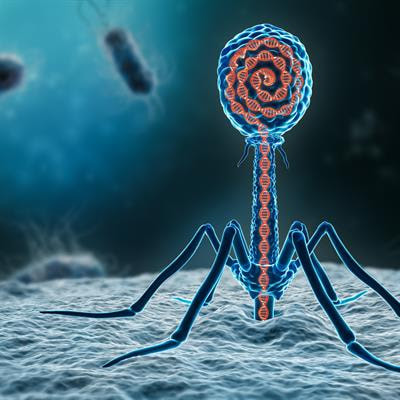
These aren’t the viruses you’re familiar with from flu season. Most ocean viruses are bacteriophages – viruses that specifically infect bacteria. They’re incredibly tiny, ranging from about 20 to 200 nanometers. For perspective, a human hair is about 80,000 nanometers wide. You could fit hundreds of these viral particles across the width of a single bacterium.
What Do They Actually Do?
Here’s where it gets fascinating. These ocean viruses aren’t just floating around aimlessly. They’re one of the most important drivers of ocean ecology and even global climate.
Every day, ocean viruses kill about 20-40% of all ocean bacteria. That might sound catastrophic, but it’s actually essential. When viruses burst open bacterial cells, they release all the organic matter inside back into the water. This process keeps nutrients cycling in the upper ocean where sunlight-loving plankton need them.
This constant viral recycling affects the entire planet. Ocean plankton produce about half the oxygen we breathe. The nutrients released by viral activity help fuel that oxygen production. Viruses also influence how much carbon dioxide the ocean absorbs from the atmosphere, playing a role in regulating Earth’s climate.
DNA Delivery Service
One of the most intriguing aspects of ocean viruses is their role as genetic exchange agents. Sometimes viruses pick up pieces of the host’s DNA and carry them to the next cell it infects. This process, called horizontal gene transfer, allows bacteria to share genetic information across species lines. It is like playing scrabble with bacterial genes. It can help organisms to get DNA upgrades and produce new molecules that they previously could not. This genetic diversity helps the ocean stay robust and adapt to changes.
Are They Useful?
Beyond their ecological roles, ocean viruses are proving surprisingly useful to science. Since bacteriophages are nature’s bacterial killers the question of “can they be used to kill bacteria infecting humans?” has come up. Yes they can! Others are using viral proteins in biotechnology applications. The diversity of ocean viruses is so vast that scientists estimate we’ve only characterized about 1% of them. Each new discovery potentially offers new tools for medicine or industry.
When You Swim in the Ocean
So what about when you take a dip in the ocean? Are you swimming through clouds of viruses? Absolutely. But there’s no need for concern. The vast majority of ocean viruses are specialists that only infect specific types of ocean bacteria. They have no interest in human cells and can’t infect us.
Your skin and mucous membranes encounter countless viruses every day, most of which are completely harmless to humans. Ocean viruses are just part of the microbial landscape we’ve always lived with. In fact, the human body contains trillions of viruses – many of which live peacefully in our gut and on our skin without causing any problems.
The Real Story
The ocean virus story reminds us how much we still don’t understand about our planet. It’s humbling to realize that something so numerous escaped our notice for so long. And it makes you wonder what else might be hiding in plain sight, waiting to revolutionize our understanding of how the world works.
The next time you’re at the beach, looking out at the waves, remember: you’re not just seeing water. You’re seeing one of the most complex, virus-rich ecosystems on the planet. So maybe this does have something to do with your health after all!
Blessings,
Dr. Jeff Ponke, MD


Leave a comment